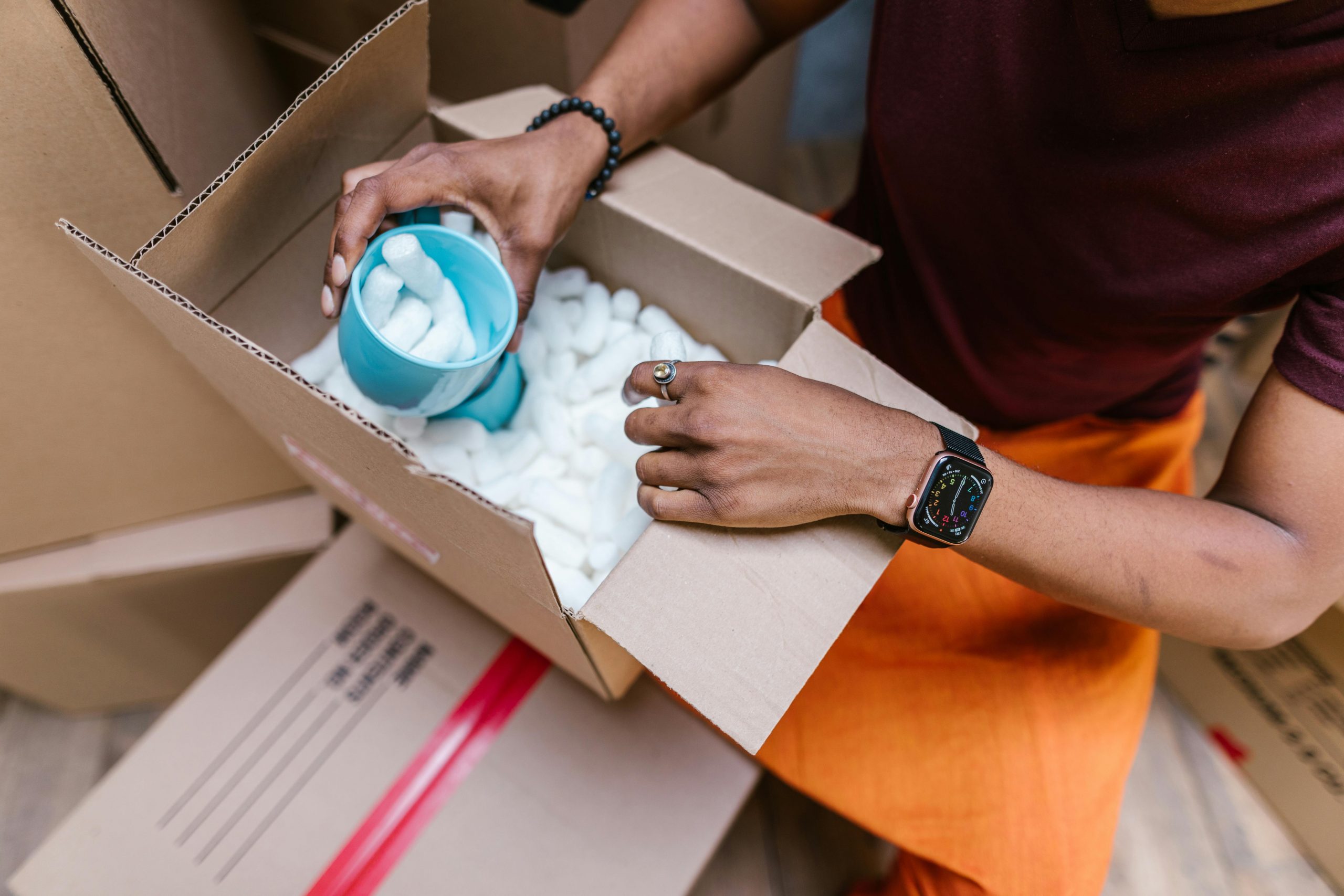
Careful packing is crucial to a smooth and successful move. In particular, you’ll need to understand how to pack valuables for moving so your most expensive and prized possessions arrive at your new home intact.
There’s an art to packing fragile items, and in many cases, Chicagoans bring in the skilled help of a professional packing team. However, if you’re planning a DIY move or just handling some of the packing on your own, here’s what you should know about moving valuable items safely, including jewelry, antiques, and electronics.
Tips for Packing Fragile Items
Learning how to pack valuables for moving involves a few steps. First, make a list of all the items you consider fragile and valuable. The list might include handmade pottery, the jewelry you inherited from your family, or the enormous TV you recently bought to watch Bears games.
Second, consider the best packing materials for each item. Your local moving company likely has moving supplies like boxes and packing paper available for rent or purchase. Although you can find free moving boxes throughout Chicagoland, they won’t protect your fragile items as well as brand-new boxes or rentable sturdy plastic moving bins will.
Third, get packing! Wrap each fragile item in packing paper or soft items you have lying around, like towels or shirts. Fill any voids in the box with more packing paper or soft material to prevent the pieces from jiggling around the box during transport, and be sure to label each box “FRAGILE” on the top and all sides.
Follow these tips and you’ll be on your way to learning how to pack valuables for moving!
Best Practices for Moving Valuable Items Safely
Because each home is unique, you might have some items that don’t fall under the jewelry, antiques, or electronics categories. In these cases, you can contact your local moving company for advice, high-quality moving supplies, or even referrals for specialty movers.
However, if you want to give it the old college try, get to know the best practices for moving valuable items safely.
How to Pack Jewelry for Moving
Even if you’ve partnered with a local mover to handle most of your pack and move, you’ll most likely have to pack and transport your expensive jewelry by yourself. Not all movers will handle high-value items that are estimated at more than $100 per pound, and in many cases, extremely personal and sentimental items like jewelry are best kept with you than packed onto a moving truck.
Here are some tips to pack jewelry for moving:
- Find small jewelry boxes to separate each item and prevent tangling.
- Use resealable bags so each necklace, bracelet, and pair of earrings has its own space.
- Wrap each item in something soft, like tissue paper, so they don’t get scratched.
- Place all of your packed jewelry inside a small plastic bin so you know where everything is and it’s easy for you to take to your new home.
For particularly valuable jewelry, you might need to contact your renter’s or homeowner’s insurance company for additional coverage. Your local mover will provide you with your choice of carrier liability or declared valuation coverage, but since items of extraordinary value aren’t usually protected under these options, your safest bet is to obtain your own insurance.
Packing Antiques for Relocation
Antiques come in all shapes, sizes, and ages—but to be officially considered “antique”, an item must be at least a century old. Since these pieces tend to fall under the high-value category of being estimated at over $100 per pound, you might want to consider additional insurance or transporting your antiques on your own, just like your jewelry.
However, the best movers in Chicago know that it’s not always that simple. Some antiques are too large or heavy for you to safely transport. If the company handling your pack and move doesn’t offer antique moving service, ask them for a referral for a specialty moving company. Several businesses across our metropolitan area focus solely on moving antique items. They might build a custom crate or provide other materials specifically chosen for your antique items.
If you’re planning a DIY move, you’ll need to take the utmost care when packing antiques for relocation. Get started by following this checklist:
- Find a sturdy box for each antique item. The box should be much larger than the item itself so you can add plenty of cushion.
- Thoroughly clean your antiques before packing so dirt and dust won’t cause scratches.
- Empty the item of any contents (if your antique is a vase, for example), and remove any parts that are meant to come off, like handles or knobs.
- Carefully but tightly wrap a soft moving blanket or a comforter around the antique and secure the cushion with shrink wrap.
- Add additional soft material to the bottom of your large box to create a barrier between the box itself and your antique.
- Gently nestle your old, fragile item into the box and fill any voids with more cushioning material. Make sure the wrapped item is separated from the box walls with soft material on all sides.
Then, close the box, label it “FRAGILE” on the top and all sides, and write “THIS SIDE UP” next to some large arrows. Make it obvious that this is a fragile and valuable item to avoid confusion on your moving day.
Protecting Electronics During a Move
Most of us have a wide assortment of gizmos and gadgets in our homes. TVs, stereo systems, computers, video game consoles, and other electronics need to be carefully packed to prevent damage to the physical item as well as the delicate inner workings.
Here are some best practices for protecting electronics during a move:
- If you have the item’s original box and manufacturer’s packing material, use it! If not, ask your local moving company for rental TV boxes for your televisions and computer monitors.
- Unplug any cords or devices from each electronic and pack them into kits. For example, put your living room TV’s cords and remote into one resealable bag, and put your bedroom TV accessories into another bag. Label each bag so you’ll know what goes where when you unpack at your new home.
- Protect your electronics’ screens by covering them with soft materials like towels or blankets. This will help prevent scratches, cracks, and punctures.
- Don’t use foam packing materials like Styrofoam peanuts, as they can cause static to build up that actually damages your electronics.
- Nestle the electronics into their boxes and fill any empty space in each box with soft clothing or crumbled up packing paper.
- Close the box, write “FRAGILE – ELECTRONICS” on it, and indicate which side should remain up with big arrows.
You’ll also need to make sure your electronics won’t be exposed to extreme temperatures for too long during the move. Here in Chicago, our weather can range from subzero winter days to triple-digit temperatures in the summer, and both of these extremes can damage electronics.
To minimize your electronics’ exposure to heat or cold, make sure these valuables are some of the last items packed onto your moving truck. If your items are going into overnight storage at your moving company’s facility, check the weather and determine if the best method for protecting your electronics during the move is to keep them with you.
We Know How to Pack Valuables for Moving—and We Can’t Wait to Help You Have a Smooth, Damage-Free Move!
Packing fragile items like jewelry, antiques, and electronics before your move can be a little nerve-wracking. Most people aren’t specially trained packers and movers, and you don’t want to leave your most prized possessions vulnerable to damage. For many Chicagoland residents, the best way to pack valuables is to leave it to the professionals—that is, the Move-tastic! team.
Our packers and movers are highly trained in how to pack valuables for moving, and we’ll be thrilled to help you have a smooth and stress-free move. Contact us today for a free estimate!